His message lives on! On the 10th anniversary of the death of Holocaust survivor Max Mannheimer, born in Neutitschein, Moravia (now Nový Jičín, Czech Republic)
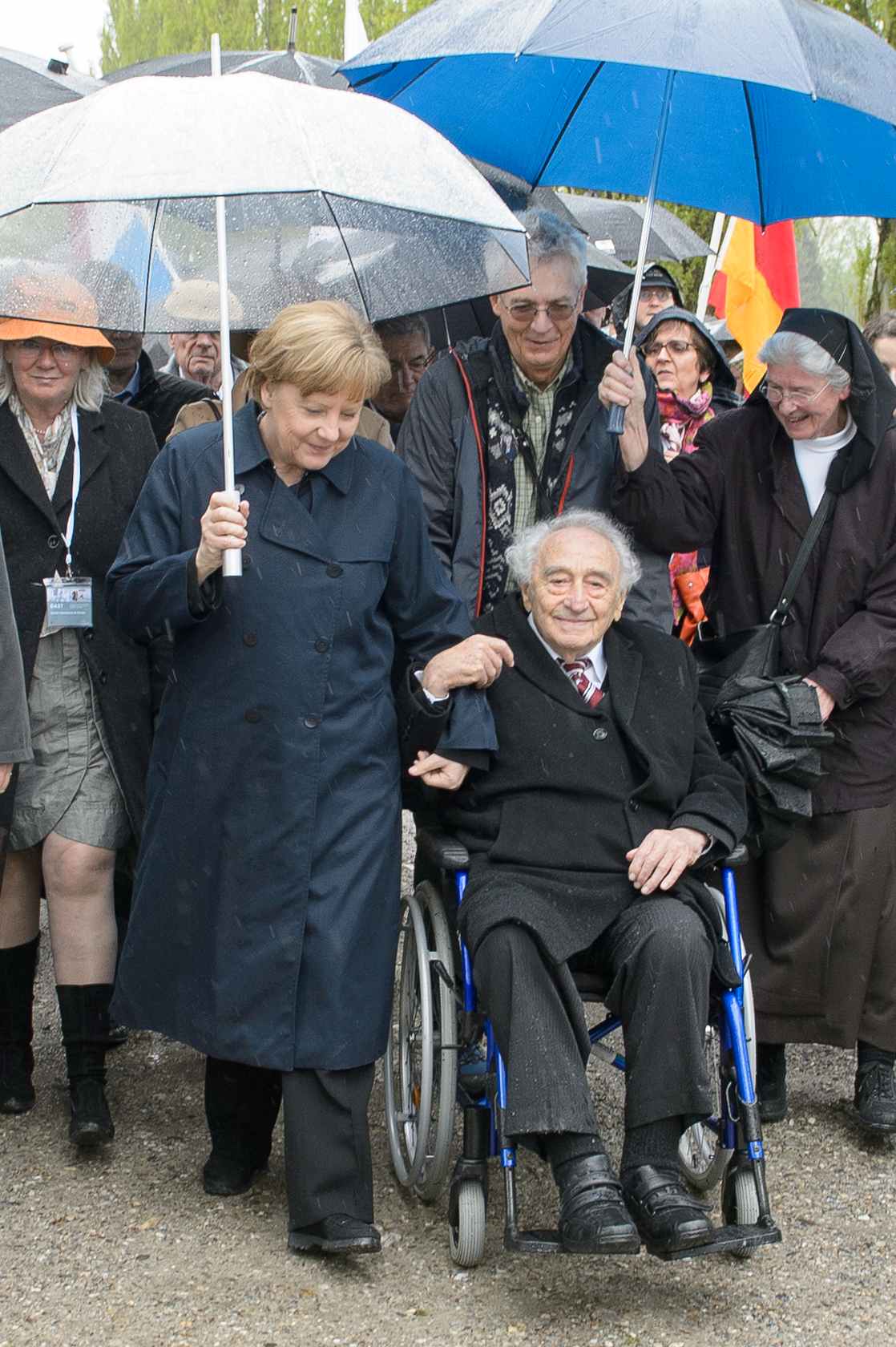
Foundation Director Karl Freller pays tribute to Max Mannheimer: “Today we commemorate one of the most significant advocates, peacemakers and pioneers of Bavarian remembrance culture. Ten years after his death, his legacy is more relevant than ever. His legacy imposes a duty upon us: historical and political education, coming to terms with Nazi crimes and strengthening democratic values remain central tasks of memorial work.”
Deeply connected to Dachau
From the 1980s onwards, Max Mannheimer worked tirelessly to ensure the memory of the victims of National Socialism was preserved. He remained closely linked to the Dachau Concentration Camp Memorial Site until his death: here he guided school pupils through the former concentration camp; direct interaction with young people was always particularly important to him. From 1990 to 2016, Mannheimer was chairman of the Dachau Camp Association, and from 1995 onwards he also served as vice-president of the Comité International de Dachau (CID). The director of the memorial site, Dr Gabriele Hammermann, comments: “Right up until the end of his life, Max Mannheimer fought tirelessly against forgetting and the resurgence of right-wing extremism. Today, ten years after his death, we find ourselves in the midst of an era against which he often warned us: a culture of remembrance without the powerful voices of the survivors. He urged us not to accept the rise of anti-Semitism and racism in our society today in silence. We miss his voice – yet his call for moral courage remains more relevant than ever.”
Remembrance is a duty
His most famous legacy sums up the responsibility of future generations: “You are not responsible for what happened. But you are responsible for ensuring it never happens again.” Mannheimer did not wish to burden young people with historical guilt, but rather to encourage them to derive responsibility for their own actions from history. Particularly in the face of resurgent anti-Semitism and political developments in which fundamental democratic values in Germany are coming under increasing pressure, his appeal takes on a new sense of urgency.
About Max Mannheimer
Max Mannheimer was born on 6 February 1920 in Neutitschein, Moravia (now Nový Jičín, Czech Republic). In 1943, he and his family were deported first to the Theresienstadt concentration camp and subsequently to the Auschwitz extermination camp. His parents, his sister, two brothers and his wife were murdered. Max Mannheimer and his younger brother Edgar survived the Auschwitz, Warsaw and Dachau concentration camps. After his liberation in Bavaria in 1945, he initially worked as a businessman and authorised signatory. Later, he worked as an artist and writer. Particularly from the 1980s onwards, as a contemporary witness, he became an important voice for education and reconciliation. He married twice more and two children. On 23 September 2016, Max Mannheimer died at the age of 96 in Munich, his adopted home